Where to stay
The right base can transform a trip. Europe offers far more than standard hotel rooms: historic state-run inns, farm stays, cave suites carved into volcanic cliffs and fishermen's cabins above Arctic harbours. Choose a stay that reflects the place, and it becomes part of the experience rather than a place to leave your luggage.
- France — intimate boutique hotels in Parisian neighbourhoods such as Le Marais and Saint-Germain; seaside villas and belle-époque hotels on the Riviera.
- Italy — palazzo hotels in Rome, Florence and Venice; agriturismi (working farm stays) in the Tuscan countryside; cliffside hotels on the Amalfi Coast.
- Spain — paradores, a state-run hotel network often set in castles, monasteries and palaces.
- Greece — cave suites cut into the caldera in Oia and Fira on Santorini; whitewashed boutique stays on Mykonos.
- Switzerland — wooden chalets in the Alps and grand lakeside hotels in Lucerne and Montreux.
- Austria — family-run Gasthöfe in the Tyrol and elegant hotels near Vienna's historic centre.
- Portugal — pousadas in historic buildings and quintas (wine estates) in the Douro Valley near Porto.
- Netherlands — canal-house hotels in Amsterdam, full of character and famously steep stairs.
- Norway — rorbuer, traditional fishermen's cabins, in the Lofoten Islands.
- Croatia — heritage hotels inside old towns and private apartments in stone houses along the Dalmatian Coast.
Stay styles compared
| Stay style | Where it shines | Pros | Cons |
|---|---|---|---|
| Boutique city hotel | Paris, Lisbon, Vienna | Central, characterful | Rooms can be compact |
| Historic inn | Spain, Portugal | Remarkable settings | Some are outside town |
| Farm stay | Tuscany, Douro Valley | Food, wine, calm | A car is usually needed |
| Cave or cliff suite | Santorini, Amalfi Coast | Unforgettable views | Many steps; high demand |
| Mountain chalet | Swiss Alps, Tyrol | Trail access, quiet | Seasonal availability |
| Fisherman's cabin | Lofoten Islands | Authentic, waterside | Remote; simple fittings |
| Apartment | Croatia, Greek islands | Space and a kitchen | Less on-site service |
Booking smart
Prioritise location over amenities: a smaller room within walking distance of the old town usually beats a larger one that requires daily transit. Check whether historic buildings have lifts, and whether air conditioning is included in southern Europe in summer — it is not universal. Many cities charge a nightly tourist tax, often payable at check-in. Favour flexible cancellation for peak-season bookings, and read recent reviews rather than older ones.
Getting around
Rail
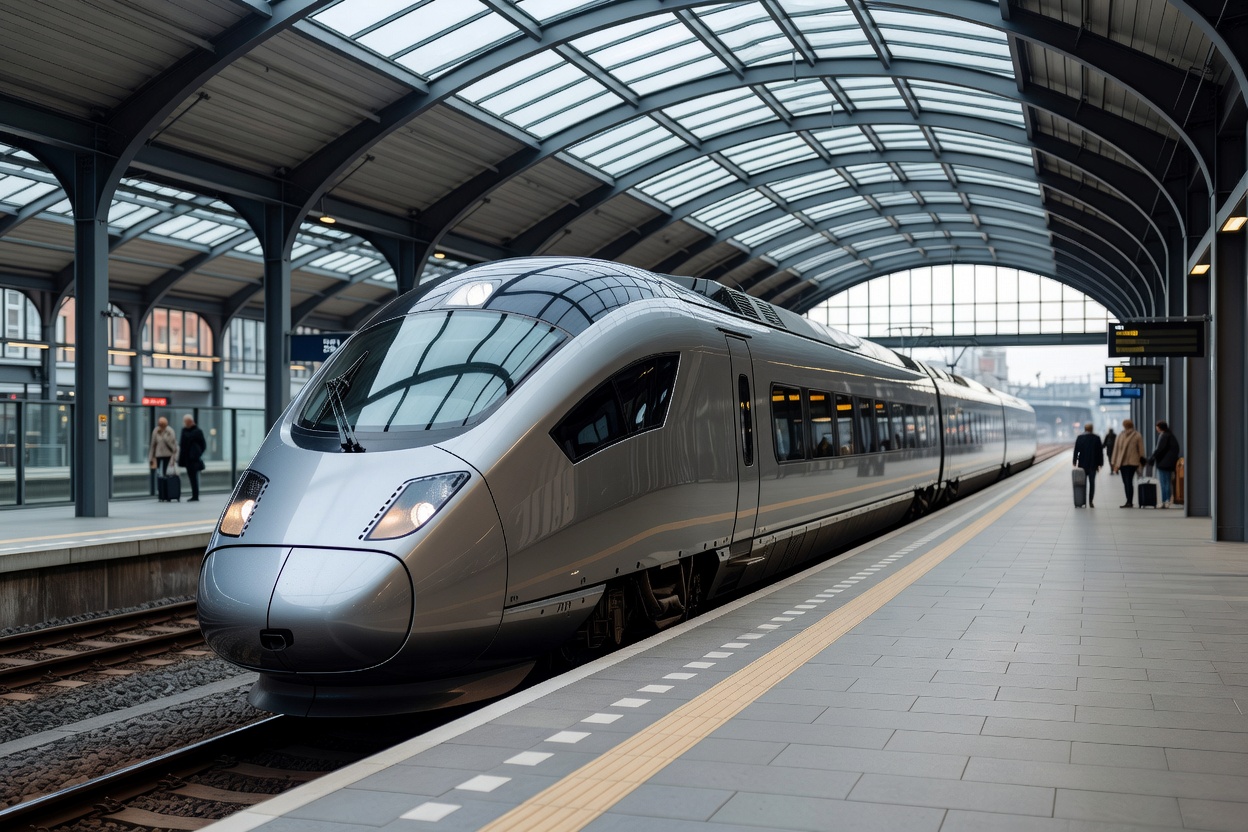
Trains are the most civilised way to cross much of Europe. High-speed services include France's TGV, Italy's Frecciarossa and Italo, and Spain's AVE, while Switzerland's SBB, Austria's ÖBB Railjet and the Dutch NS are known for dense, reliable networks. Eurail passes serve non-European residents and Interrail passes serve European residents; some high-speed trains require an additional seat reservation. The Swiss Travel Pass covers most trains, buses and boats within Switzerland.
Flights
For long hops — Lisbon to Athens, or Amsterdam to Tromsø — flying saves a day. Budget airlines can be good value, but read baggage rules carefully and factor in airport transfer time.
Ferries
Ferries are essential in Greece, linking Athens' port of Piraeus with Santorini, Mykonos and Crete, and along Croatia's coast, where Jadrolinija is the main operator serving Split, Hvar and Dubrovnik. Timetables thin out outside summer.
Car
A car makes sense on Crete, in the Algarve, in the Norwegian fjords and for rural Tuscany. On the Amalfi Coast, narrow roads and limited parking make buses and boats easier. In Italian historic centres, watch for restricted traffic zones (ZTL).
Transport compared
| Mode | Best for | Pros | Cons |
|---|---|---|---|
| High-speed rail | City to city | Centre to centre, scenic, relaxed | Peak fares rise when booked late |
| Flights | Long distances | Fast across the continent | Transfers, baggage fees |
| Ferries | Greek and Croatian islands | Scenic, often the only option | Weather and seasonal timetables |
| Rental car | Rural areas and coasts | Freedom and flexibility | Parking, tolls, city restrictions |
Scenic journeys
Some journeys are destinations in themselves. In Switzerland, the Glacier Express, the Bernina Express and the GoldenPass line between Montreux, Interlaken and Lucerne cross magnificent Alpine scenery. In Norway, the Bergen Line links Oslo and Bergen across high mountain plateaus, the Flåm Railway descends steeply towards the fjords, and the Hurtigruten coastal route sails north from Bergen past Lofoten and Tromsø.
Rail passes
- Flexibility for many journeys
- Good for spontaneous routes
- Reservations may cost extra
Point-to-point tickets
- Often better value booked early
- Ideal for fixed itineraries
- Less flexible if plans change
See how these connections fit together in our suggested itineraries.